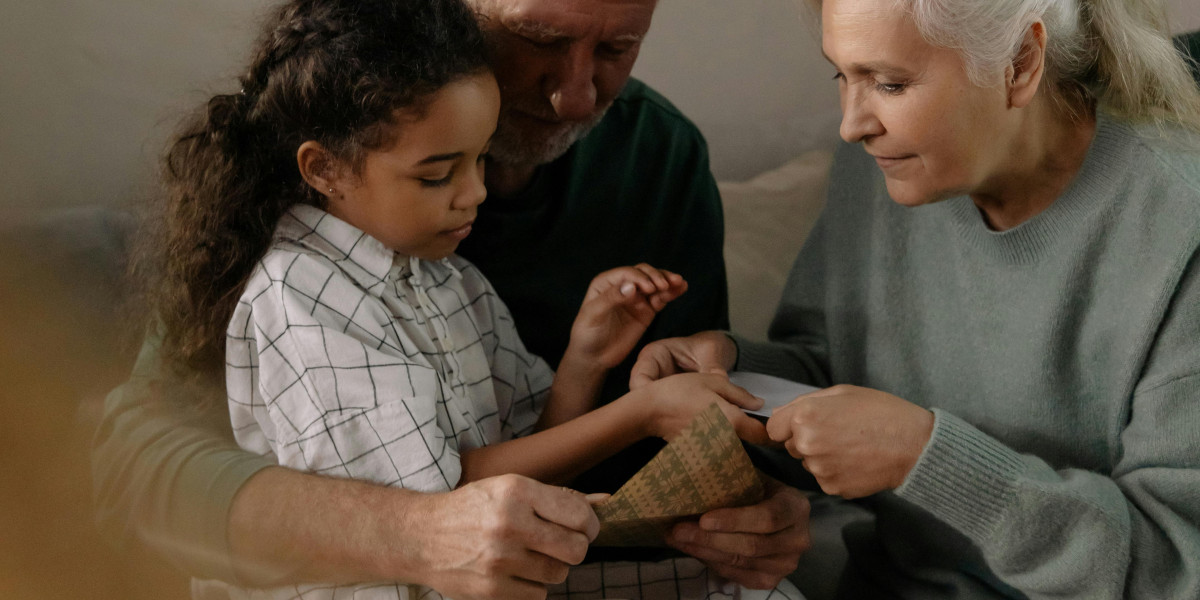

The relationships within the family are occasionally required to be scientifically verified in legal terms, inheritance, or to have some peace in the soul. Although everyone is conversant with paternity tests between fathers and children, grandparentage DNA testing plays an essential role where the direct parent-child testing cannot be done. Knowledge of when and why grandparent testing is needed helps family members overcome complicated circumstances of custody, immigration, and bringing claims to estates. This blog will be an explanation of the situations in which grandparent DNA testing is needed, as compared to ordinary parentage testing, as well as the science involved in the determination of biological relationships between generations. Instead, by being informed about the possible options of family relationship testing, the families can use the one that suits their needs best.
What is the need to test grandparentage using DNA, and what is the difference between the grandparentage and the usual parentage testing?
It is in cases of determining the genetic links between grandparents and their grandchildren that the grandparentage DNA testing is required, especially in cases where the parent of the intermediate generation is not testable. This happens when an assumed father has died, declined to do so, or cannot be found to conduct a normal paternity test. Grandparent DNA testing is also used to solve the custody problems in which the grandparents request legal custody of grandchildren[1]. In some instances, the cases of immigration necessitate evidence of family relations in case complete parental documentation is not conducted. Compared to the typical parentage testing, the testing is of a different methodology and complexity. Here is a clear comparison:
Feature | Grandparentage DNA Testing | Standard Parentage Testing |
Relationship Tested | Grandparent to grandchild | Parent to child |
Genetic Connection | Indirect through parent | Direct parent-child link |
Accuracy Level | 85-95% typically | 99.9% or higher |
Samples Required | Both grandparents preferred | One parent and child sufficient |
Test Complexity | More complex analysis | Straightforward comparison |
Cost | Generally higher | Less expensive |
Results Certainty | Probability-based conclusions | Definitive inclusion or exclusion |
Knowing these differences enables the families to have realistic expectations regarding what family relationship testing can tell in the grandparentage scenario.
In what legal or personal cases is grandparent DNA testing usually ordered?
In different situations, the grandparent DNA testing arises when the normal paternity testing does not apply. The most common ones are the following:
Deceased Alleged Father: Tests on the parents can be the only direct biological support of kinship to the child when the potential father has died prior to the establishment of paternity.
Custody Battles: The grandparents who are seeking custody or visitation privileges may be required to demonstrate biological connections to grandchildren, especially in cases where parental rights are already terminated or doubted.
Estate and Inheritance Claims: Children who are asserting inheritance of the grandparents or their estate, and as such, there are no records available, or there are disputes, the claims may need DNA evidence to establish our biological relationship.
Immigration Sponsorship: Family-based immigration applications are, at times, based on the relationship with grandparents, where parents are not allowed to sponsor children directly, but instead provide scientific evidence of family relationship testing.
Adoption Reunifications: Sometimes, adopted adults who are identified as children relate with their biological grandparents and not parents, so testing is required to establish possible family ties.
Child Support Cases: Alleged fathers who refuse to submit to testing because of denying paternity may have their parents in grandparentage testing to prove their relations to deny them.
Missing or Unknown Parents: Children whose parents are absent and have no information on the identity of their father are at liberty to undergo testing with paternal grandparents in an effort to form family relationships.
Personal Knowledge: Individual families would like to be assured of biological ties to have personal tranquility regarding relationships without legal consequences, especially in blended families.
What should be done when the parent is not available to be tested by way of grandparentage testing?
The grandparent DNA testing involves the analysis of genetic markers, which are transmitted to a child by the grandparent. The grandchildren have about twenty-five percent of their DNA from each of their grandparents. Laboratories test certain genetic markers referred to as STRs, which are passed on in predictable patterns. When the two grandparents are tested, the accuracy is greatly enhanced since more genetic information will be obtained to be compared. In the case of one grandparent, the findings are not as clear.
The laboratory measures the probability percentages on the basis of shared genetic markers, which point to a biological relationship. It is better to include the known parent, as it helps to be more accurate, as it is clear on which side of the family the genetic markers originated. Labs such as Choice DNA offer detailed grandparent DNA analysis services, including professional interpretation and reporting.
Conclusion
Grandparentage DNA testing fills a significant gap in testing family relationships in cases where direct parent-child testing is not possible. This special testing is not similar to standard paternity tests in terms of level of complexity and accuracy because the indirect genetic relationship is tested. Grandparent testing is required in different legal and personal circumstances, such as custody trials, inheritance, and immigration. The science examines inherited genetic markers that are common between generations and comes up with a probability of biological relationships.
The fact that the two grandparents are being tested gives better evidence compared to the one that is being tested. To individuals who want to get the services of the reliable ones, such facilities as Choice DNA can recommend the relationship DNA testing[2], which provides a full-fledged analysis of the situation, allowing families to overcome complicated situations with confidence and understanding.
References:
[1] https://www.choicedna.com/relationship-dna-tests/grandparentage-testing/
[2] https://www.choicedna.com/relationship-dna-tests/